





Sculpture
Category
SculptureAbout This Project
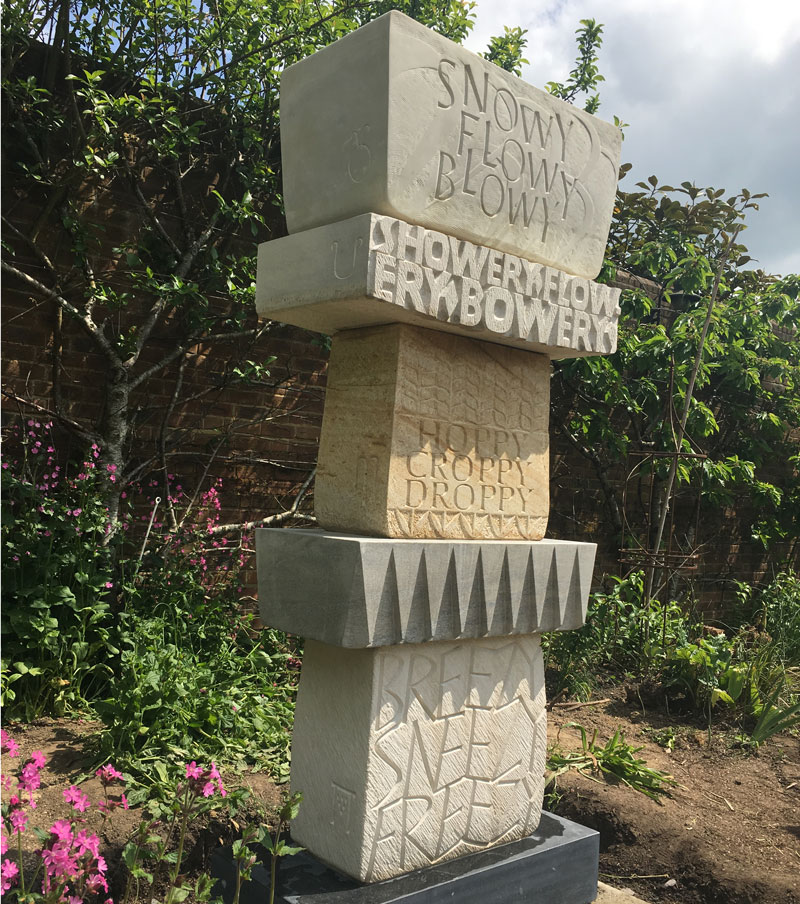
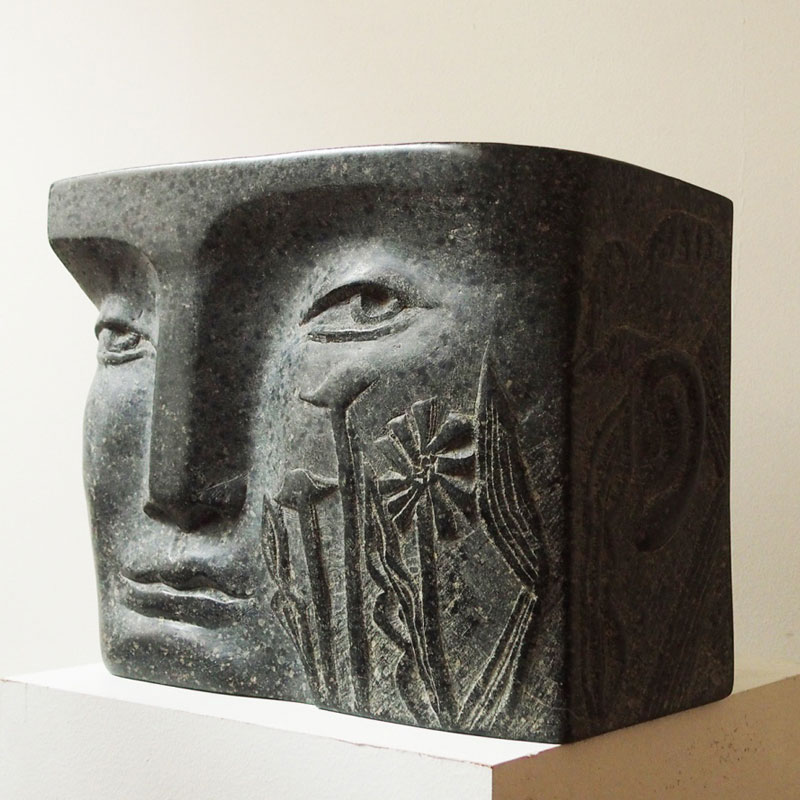
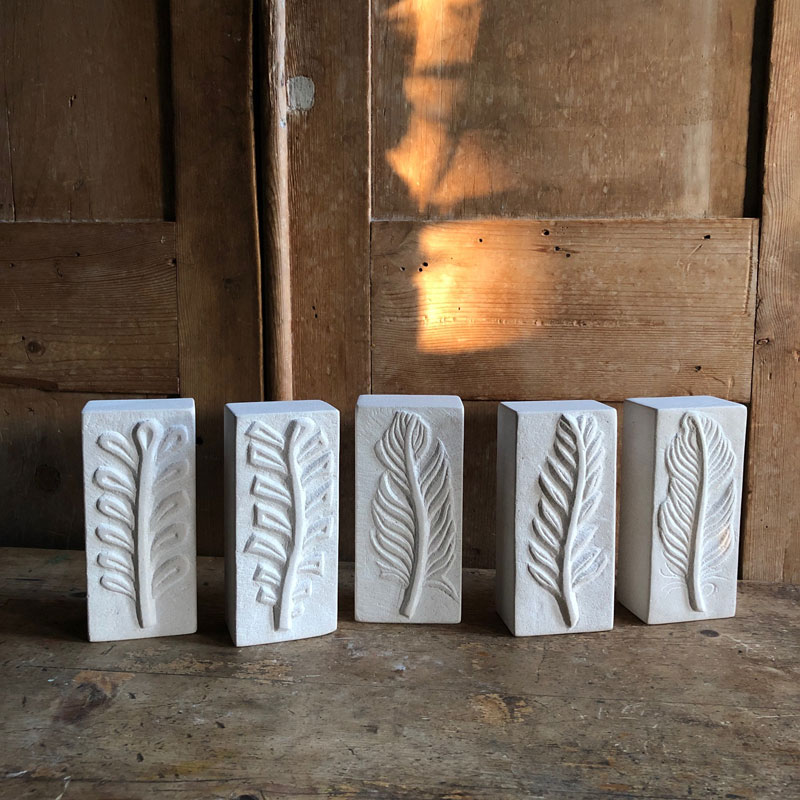
My work is based on the concept of ‘Shul’, a marking which remains after the thing that made it has passed through: a dry riverbed, a hollow an animal made in the grass. My interest is in how these traces are left on our bodies and memories. I use words, or a figure, or plant as a starting point and focus on growth and change.
I celebrate a moment in time. Starting points can be poetry, an overhead conversation or the landscape. I aim to make the moment visible and monumental. My work contemplates life and although direct carving techniques are used my work is not traditional. I use drawing and print-making to refine ideas, but like to carve directly on to the faces of the stone without certainty. I realise the form fully once the carving begins.
Statement for
‘Inspired by the Word’
Petersfield Museum and Physic Garden
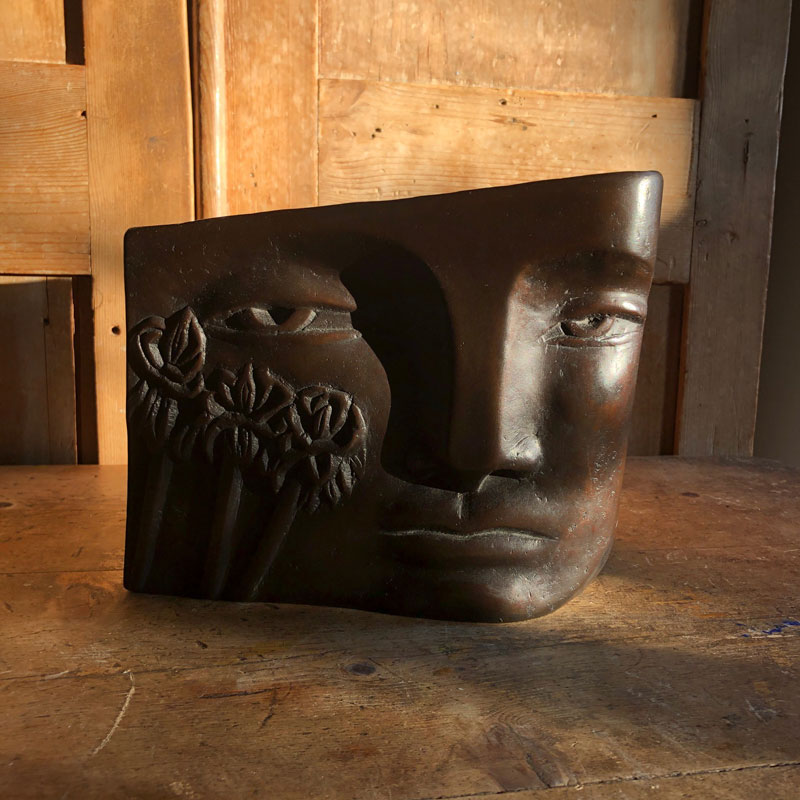
‘Winterling’ and ‘Dimpse’ Bronze Shul Heads
by Jo Sweeting
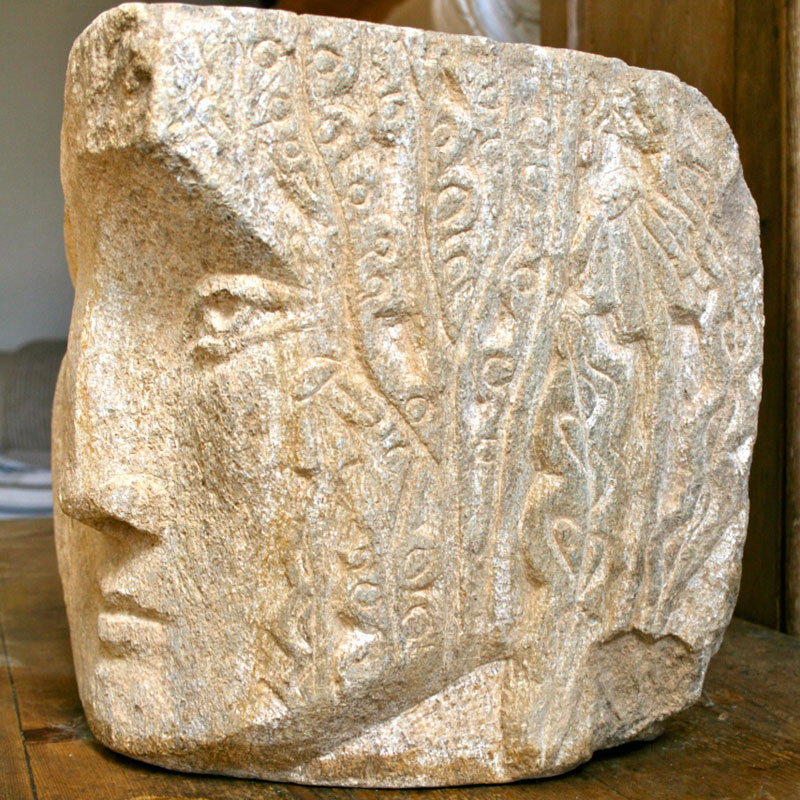
‘Winterling’ and ‘Dimpse’ Shul Heads were initially carved in Polyphant stone and then cast in bronze.
Ideas for the pieces are to do with memory and the concept of ‘Shul’.
‘Shul’ can be a mark left where a dry river bed has passed or an animal has left a hollow form after laying in the grass or a dry river bed. These are marks left in the place or perhaps in the mind.
Both pieces were made in response to Edward Thomas walking along chalk paths in the Downs where I grew up. His poetry and writing stays with me and then images come to mind.
The pieces carry forms and marks from the landscape. Field forms,roads and meadowland plants. In ‘Winterling’ Thomas face appears in the midst of meadow and chalk land plants. In particular winter aconites or winterlings. These are the first flowers of spring and are opening towards Thomas eyes, closing as they turn away from him.The image comes from Thomas poem ’In Memoriam, Easter 1915’ and responds to the lines ‘The flowers left thick at nightfall in the wood’.
Thomas loved the English landscape and held it with him when he left for France. A landscape that he was prepared to fight, and ultimately die for.
‘Dimpse’ is a word used to describe the first and the last of the light at the break and dying of the day. This head describes the road taken and the fields walked both in France and at home with his wife Helen. The raking light illuminates the ploughed field lines on the piece and there is a suggestion of a soldiers nose piece in the heads composition.
The nature of the stone type and its history are always close to me. My interest in landscape and the stone being a literal part of the landscape is central to my ideas.
Definition of Shul
An old new word: shul. Stephen Batchelor (Buddhism Without Beliefs, in the chapter titled “Emptiness”) defines and explains:
“Emptiness,” said the Tibetan philosopher Tsongkhapa, in 1397, “is the track on which the centered person moves.” The word he uses for track is shul. This term is defined as “an impression”, a mark that remains after that which made it has passed by — a footprint, for example. In other contexts, shul is used to describe the scarred hollow in the ground where a house once stood, the channel worn through rock where a river runs in flood, the indentation in the grass where an animal slept last night. All these are shul: the impression of something that used to be there.
A path is a shul because it is an impression in the ground left by the regular tread of feet, which has kept it clear of obstructions and maintained it for the use of others. As a shul, emptiness can be compared to the impression of something that used to be there. In this case, such an impression is formed by the indentations, hollows, marks, and scars left by the turbulence of selfish craving. When the turmoil subsides, we experience tranquility, relief, and freedom.
To know emptiness is not just to understand the concept. It is more like stumbling into a clearing in the forest, where suddenly you can move freely and see clearly. To experience emptiness is to experience the shocking absence of what normally determines the sense of who you are and the kind of reality you inhabit. It may last only a moment before the habits of a lifetime reassert themselves and close in once more. But for that moment, we witness ourselves and the world as open and vulnerable.
So a shul is a dual, a nothing that’s something, a whole hole.